Crabpilot

Robot workers for the field.

Bring us a problem on a farm, an industrial site or a mission. We solve it with our machines, with yours, or with both working as one team.

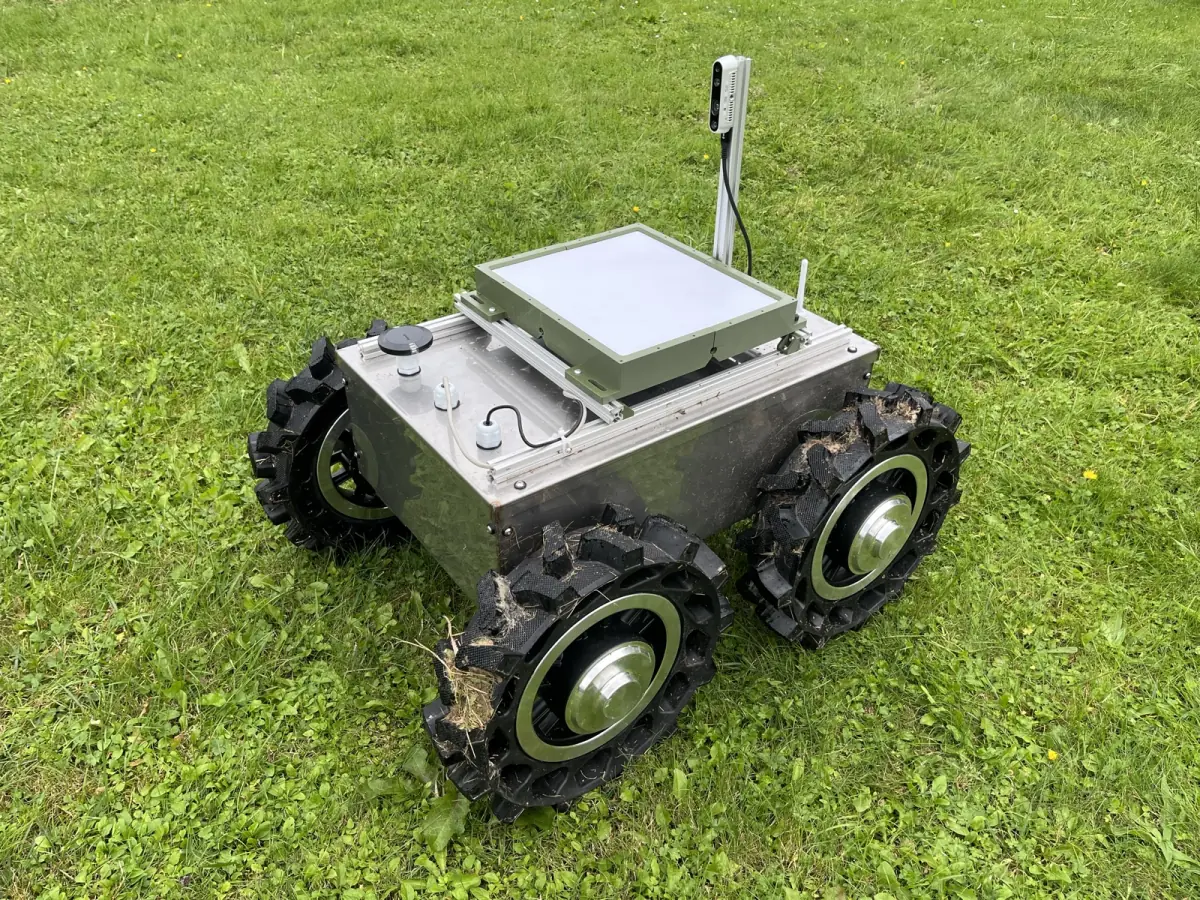
UGV1, a four-wheeled metal ground robot, on a field of grass

How a job runs

One looks from above, one does the work on the ground, and one person directs both.

  1. Find it

    UAV1 flies over the field or site and marks what needs doing.

  2. Go there

    The ground vehicle drives to each mark, on a route it knows to the centimetre.

  3. Do the work

    With the tool the job needs: a sprayer, a sensor, a load.

Today one station runs both machines. Tools, and the drone handing a spot to the ground vehicle, are what we are building next.

Our machines

UGV1 and UAV1 work today and UGV2 is on the way. Each is built to carry a tool.

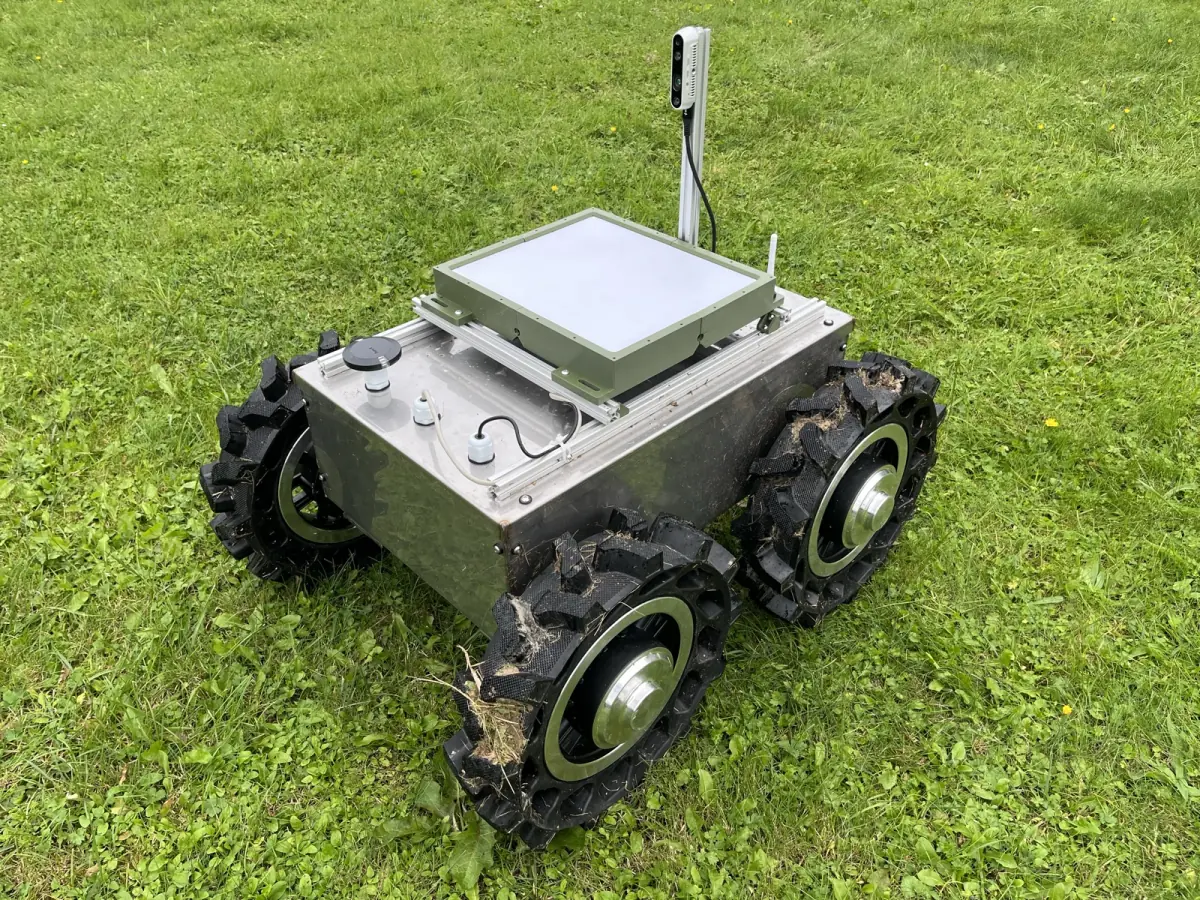
UGV1, a four-wheeled metal ground robot, parked on grass

UGV1

Works today

Drives the route you teach it, or one drawn on a map, to the centimetre.

Specifications
Size
600 × 400 × 300 mm
Payload
Up to 100 kg
Body
Full metal
Wheels
16-inch geared terrain wheels
Battery
Three 42 V, 4000 mAh packs
Positioning
RTK (u-blox F9P), to the centimetre
Link
Starlink on board
Computer
Jetson Orin NX, 16 GB
Proven on it
Drives a route it was taught, follows a route drawn on a map, comes back home on its own, knows where it is to the centimetre
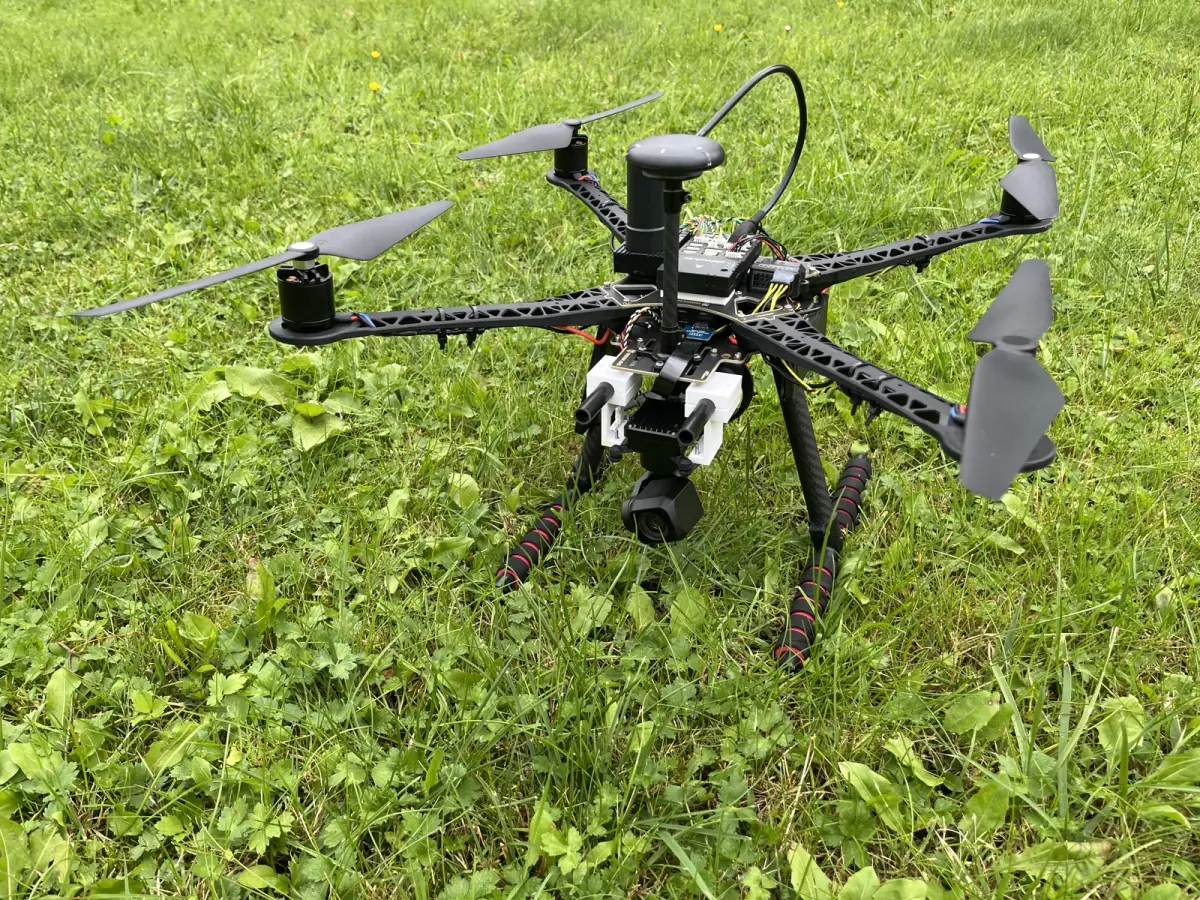
UAV1, a four-rotor drone with a camera underneath, standing on grass

UAV1

Works today

Flies the job from above and shows you what it sees, for 30 minutes per battery with its camera.

Specifications
Frame
Quadcopter, Holybro S500 V2
Autopilot
Pixhawk 6C
Camera
On a gimbal
Battery
One 4S, 5000 mAh pack
Flight time
30 minutes with the camera
Positioning
RTK (u-blox F9P)
Computer
Jetson Orin NX, 16 GB
Proven on it
Flies missions on its own, flies with the ground vehicle from one station, detects objects in its camera view on board

UGV2

In development

The bigger one: rougher ground, heavier loads, longer trips, on the same software as UGV1.

What we know so far
Size
1000 × 750 × 400 mm
Payload
Designed for 250 kg, in a bay for the tool or the load
Frame
Rigid, for rough ground
Wheels
Larger than UGV1
Battery
One 12S LiFePO4, 100 Ah pack
Other numbers
Published once they are measured

Already have machines?

If your drone or ground vehicle runs ArduPilot or PX4, it joins the same team as ours, on the same station. Anything else, we look at with you.

Problems we solve

Three examples of how we would put the machines to work. Each one starts with your problem and runs in simulation before it runs on your ground.

On the farm

Treat the weeds, not the whole field.

How we would do it: UAV1 flies over and marks the patches that need work. The ground vehicle drives to each one and treats only that spot.

Works today: mapped routes on RTK and flights with the camera. Tested in simulation: weeding a crop row scored end to end. Next: the spot-treatment tool, the drone-to-ground hand-off (in simulation first) and a pilot on your field.

On an industrial site

Daily rounds without the walking.

How we would do it: UAV1 checks the fence line or the panel rows from above. The ground vehicle does the rounds on a route it has learned, carrying sensors or parts. Machines you already run on ArduPilot or PX4 join the same station.

Works today: learned routes, coming home on its own, command over Starlink and machines on ArduPilot or PX4 joining. Next: the sensor kit and a pilot on your site.

On a mission

Nobody on the dangerous stretch.

How we would do it: UAV1 scouts the route ahead. The ground vehicle carries the supplies along it, and several can follow one another.

Works today: learned routes, coming home on its own and centimetre positioning. Tested in simulation: three vehicles in formation. In development: finding the way when GPS is weak. Next: a military mesh radio for the link and a pilot with a unit.

Where we are

We say plainly what works today and what we are still building.

Works today

  • UGV1 on real routes: taught routes, map missions, coming home, centimetre positioning
  • UAV1 flying missions on its own, with its camera
  • UAV1: 30 minutes a flight with the camera
  • One station running both machines
  • Machines on ArduPilot or PX4 joining the team

Tested in simulation

  • Three vehicles driving in formation, within 0.1 m
  • A fleet run from one station, every vehicle’s link watched
  • Vehicles sharing out a job among themselves
  • Weeding a crop row, scored end to end

Still building

  • UGV2
  • Tools that switch on along the route
  • Stopping for obstacles, so a run can go unattended
  • Finding the way when GPS is weak
  • First pilots on farms, industrial sites and with defence users, each tried in simulation first
  • A military mesh radio for the link
  • A UGV2 data sheet, once it is measured

Put them to work on your problem.

Bring us a field, a site or a mission. We will show you what the machines would do with it.

Bring us a problem

Crabpilot s.r.o. is a two-founder company from the Czech Republic. Defence work goes through authorised end users and Czech and EU export rules. About the company